
"The garage door opened, and there was this super tall white guy waiting for us. That was Patrick."
In the crisp Canadian air, the scene felt like the opening shot of a movie. Inside the garage, Patrick was briefing a group of young climbers and signing paperwork. Behind him hung a massive poster of Larry, his dear friend who lost his life in a climbing accident. At that moment, director Wang Yi-hsin felt as though Larry was watching them from the wall—gazing at the very youths who were about to inherit his unfulfilled ambitions and finish the journey he couldn't.
With its abundance of steep mountains, Taiwan is an ultimate testing ground for global alpinists. Yet, in the 2000s, Taiwanese climbers faced a massive technical gap compared to the rest of the world. “In the 2000s, our climbing techniques were about thirty to forty years behind the global forefront,” Wang explains. To bridge this gap, Larry ventured abroad to hone his skills. It was there he met Patrick, a kindred spirit who would become his lifelong friend and climbing partner.
In 2022, Taiwan launched the "Seed Project," aimed at cultivating a new generation of alpinists. Larry returned to Taiwan to serve as a mentor, but tragically fell to his death while attempting a new route on the North Face of Yushan (Mt. Jade). Despite the heartbreak, the project didn't stop. Patrick crossed the ocean to take over the training, guiding young Taiwanese climbers through techniques and leading them on expeditions in Canada. It was through the Seed Project that director Wang Yi-hsin got to know Patrick, laying the groundwork for the documentary Back on North Face.
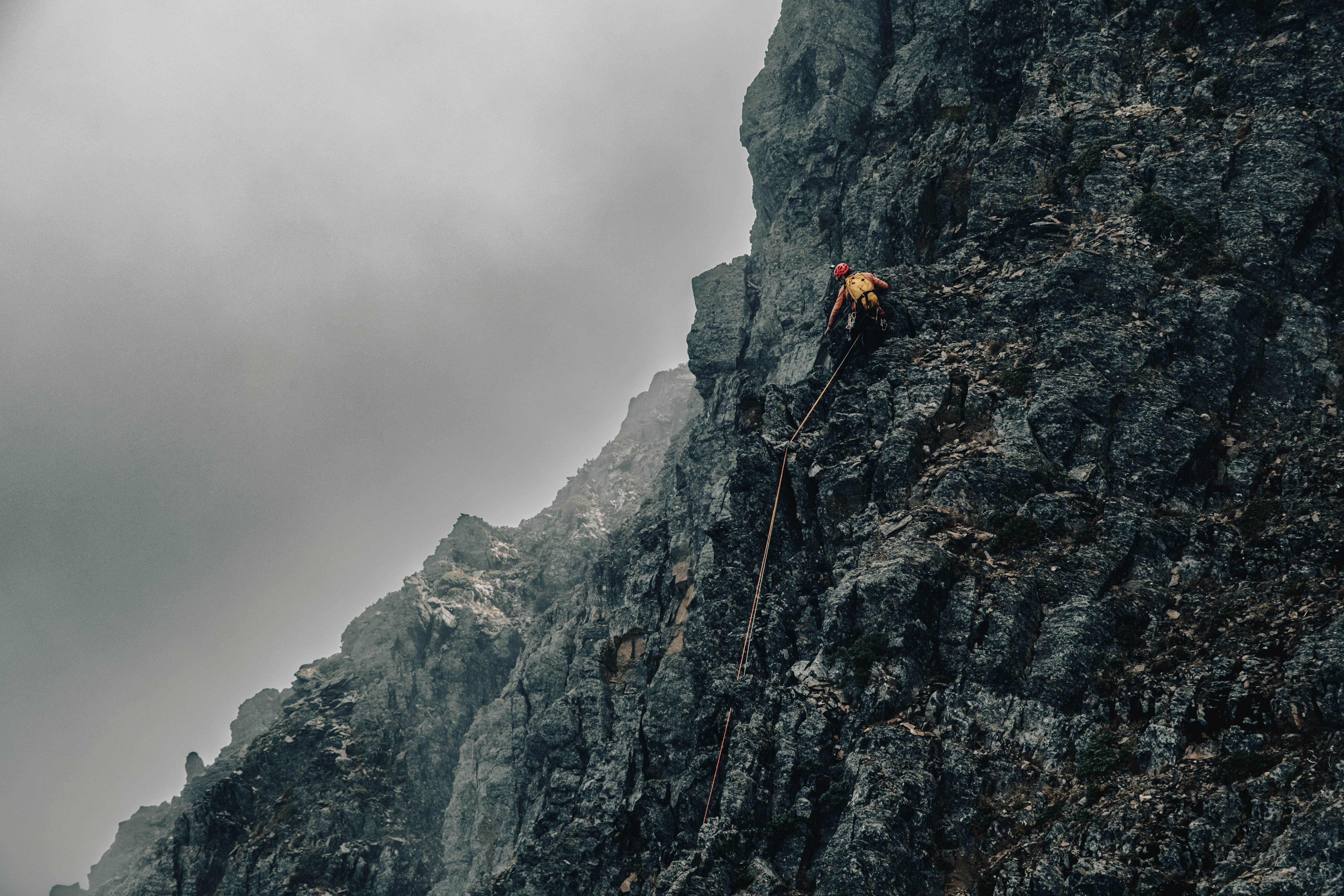
The Iron Box on Mt. Rhondda: An Anchor in Time
“After summiting Mt. Rhondda, I saw Patrick take an iron box from beneath the rocks and snow, write a note, and place it inside. I felt electric, as if everything suddenly connected.” Across the peaks of Canada, these iron boxes are scattered like an analog social network. They hold decades of summit messages from climbers, growing from a few solitary scraps of paper in the beginning to thick stacks of stories today.
As the two-to-three-year filming process neared its final cut, Wang and Patrick revisited Mt. Rhondda. This time, they placed a note detailing their ascent of Yushan’s East Peak into the box. It was a ritual, a way of speaking to the mountains and to a lost friend. “It was like telling Larry, ‘We finished the route safely,’” says Wang.
“Patrick told me he wanted to come to Taiwan to climb the North Face of Yushan East Peak. The original motivation was incredibly simple: I wanted to help my mentor and my friend fulfill his wish,” Wang adds. “Patrick was happy to hear that someone wanted to document Larry’s story. But I imagine he also had his doubts, wondering why I was the one doing it. There’s a common thread in making these kinds of documentaries: you have to build a mature, deep-rooted trust with your subjects. That kind of relationship doesn't just go from zero to a hundred overnight. I think I understood what Patrick needed to see, and he trusted that I would complete this project with integrity and kindness. Trust is the most important thing.”
Navigating Between Climber and Director
While it isn’t the first film about Taiwan’s mountains, Back on North Face is the first adventure documentary centered on "alpine climbing"—delivering more breathtaking visuals and high-stakes footage.
“Taiwan hasn’t had a mature adventure culture that encourages people to take on challenges,” Wang notes. Take the North Face of Yushan, for example. When climbers from South Korea or elsewhere look at it, they often remark that in their home countries, an alpine face like this would have been climbed extensively by now. But in Taiwan, due to its highly fractured rock, the exploration is just beginning. “In places like France or Japan, you can get the same alpine experience much more safely. But in Taiwan, it’s remarkably easy to claim a ‘first ascent.’ Standing up there, looking down, and realizing you are the very first human to stand on that spot—the emotion of that is entirely different.”
To tell this story properly, Wang had to step outside his comfort zone. “My passion for climbing hasn't changed at all, but to tell this story well, I had to step out of my identity as just a climber.” Known for keeping a low profile, Wang realized his new mission was to explain the essence of adventure and the deep bonds of climbing partnerships to a broader audience. “I’m now also a director and a storyteller.”
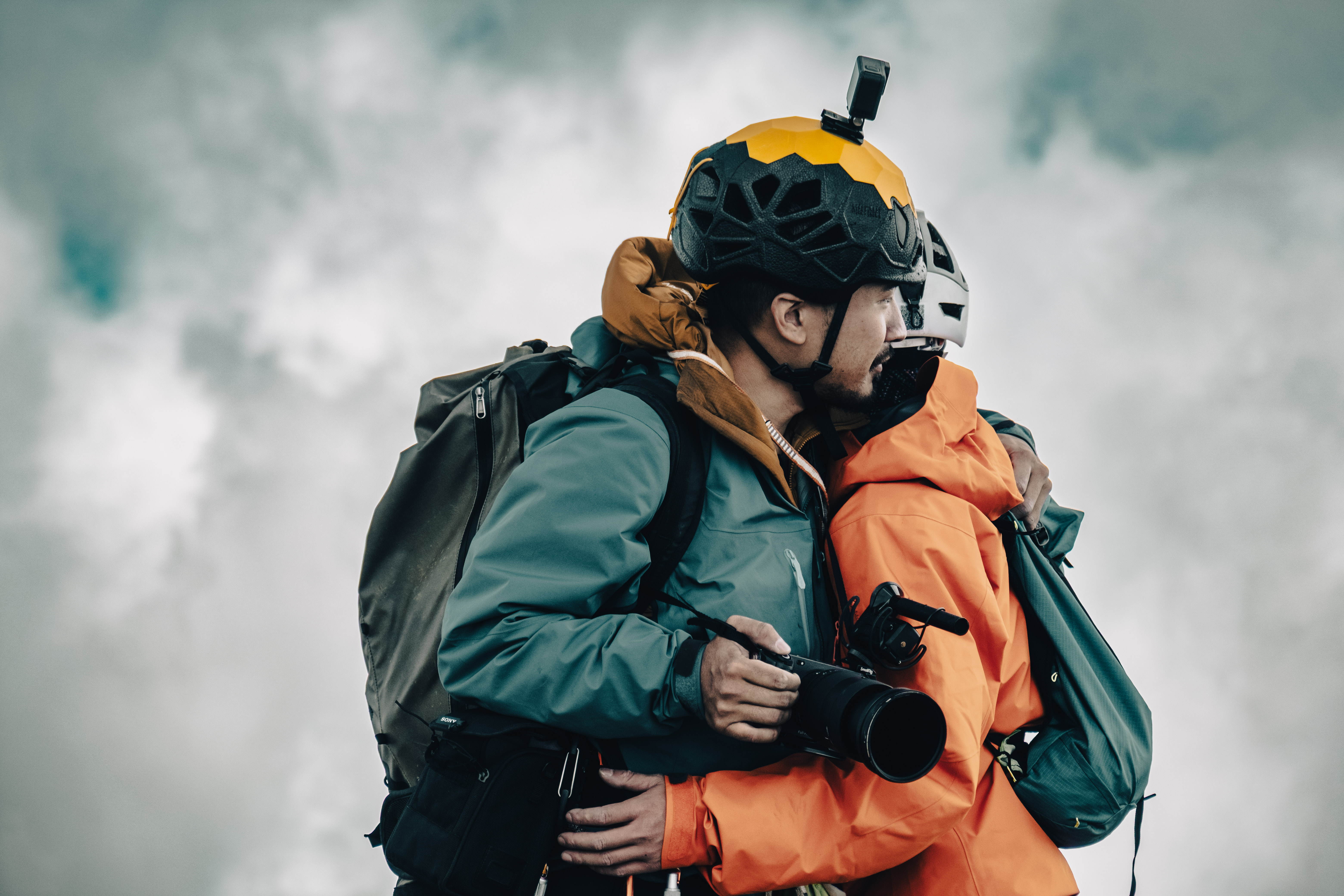
Documenting the Adventure, Not Just the Mountain
“It was an unclimbed face, and the rock was incredibly loose.”
Initially, the crew envisioned a production style akin to the Oscar-winning Free Solo, using rope-access techniques and high-end cinema cameras. “But the reality of the climb was different. The North Face isn’t like the solid granite that thousands have stepped on; the rockfall risk was too high.” Consequently, Wang took on much of the filming himself, heavily relying on drones to capture angles that were too perilous for a human crew.
Beyond logistical hurdles, Wang faced intense scrutiny from within his own community. “Climbing is my roots. I wanted this project to help climbers, but ironically, I faced a lot of skepticism from people within the field. Dealing with that was actually the hardest part.” While his capabilities and motives were scrutinized, Wang found their reactions understandable and worked hard to recalibrate his own mindset. "I had to hold my boundaries and edit the film with the utmost kindness."
In the editing room, it is always tempting to amplify drama and conflict, but the director made a conscious choice to minimize any potential for harm. "We chose to let certain elements take a back seat, and we discussed all the content with the individuals involved. That is where I poured most of my heart and energy."
The ultimate reward, however, was deeply personal. “Patrick told me that since Larry passed away, he hadn't climbed for himself once, because his best partner was gone. But after we climbed Yushan East Peak together, he said he was ready to start climbing for himself again,” Wang smiles. “Hearing that was my happiest moment. I felt like I had done exactly what I set out to do.”
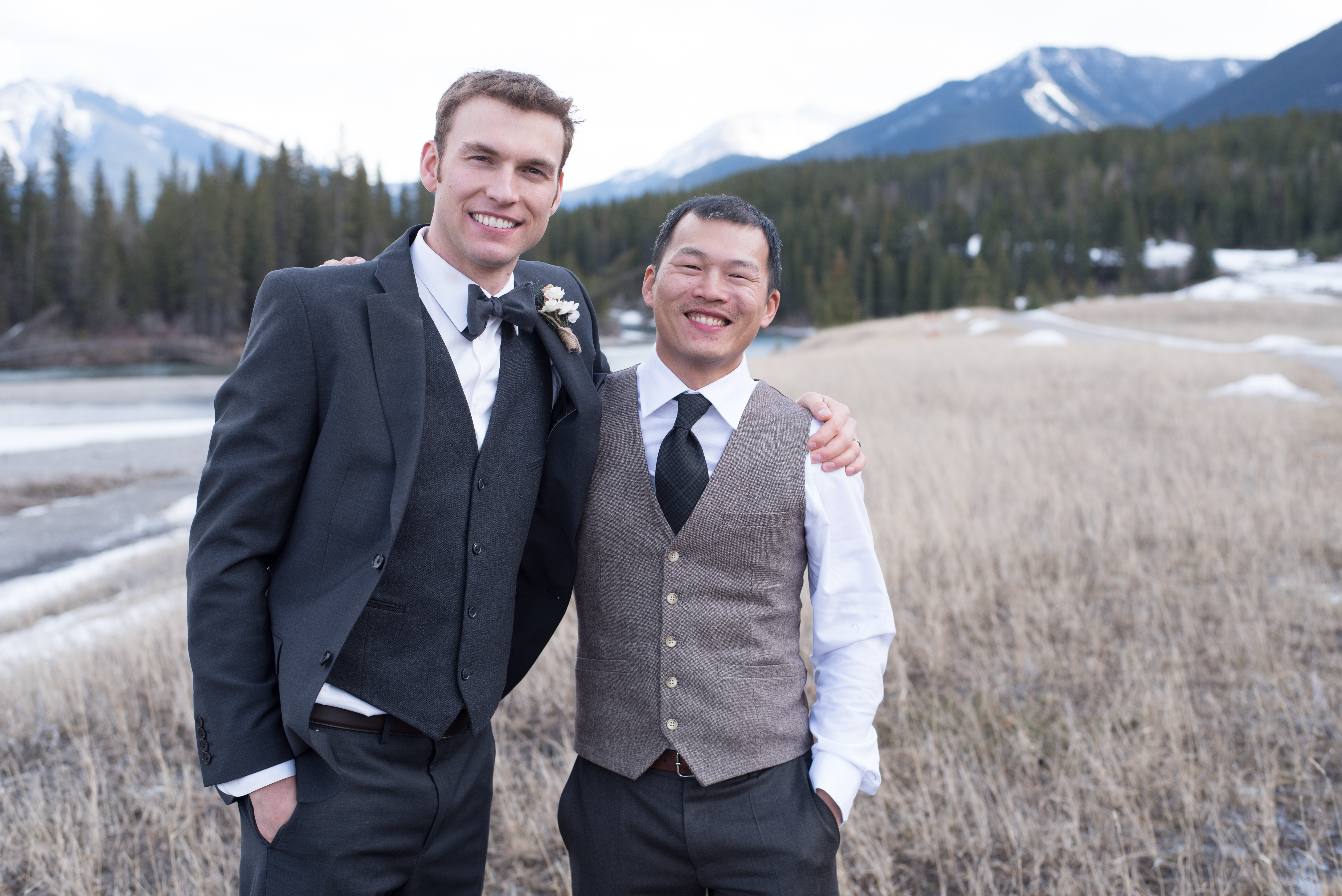
The Favorite Shot That Didn’t Make the Cut
Out of years of footage, Wang’s favorite shot surprisingly didn't make it into the final film because it didn't quite fit the narrative pacing. During an outdoor interview with Larry’s friend, Connor, a sudden downpour forced the crew to relocate. Halfway through the continued interview, they realized there was a prominent public restroom sign right behind Connor’s head. “Connor just laughed and said it was perfect. It was a joke from Larry.”
To the new generation, Larry is a pioneer and an icon; but to his peers, he was someone who always used humor to diffuse tension in dangerous situations. “It was the perfect way to tell Larry’s story,” Wang reflects.
Wang himself never actually met Larry. “I was just like the audience. My knowledge of him was zero, yet he profoundly impacted my life. The day Larry died was the day I had just finished training with friends and was preparing for the Seed Project. Seeing the news that the man who was supposed to train us next year had died... it was a massive shock. That shock is a big reason why I needed to make this film.”
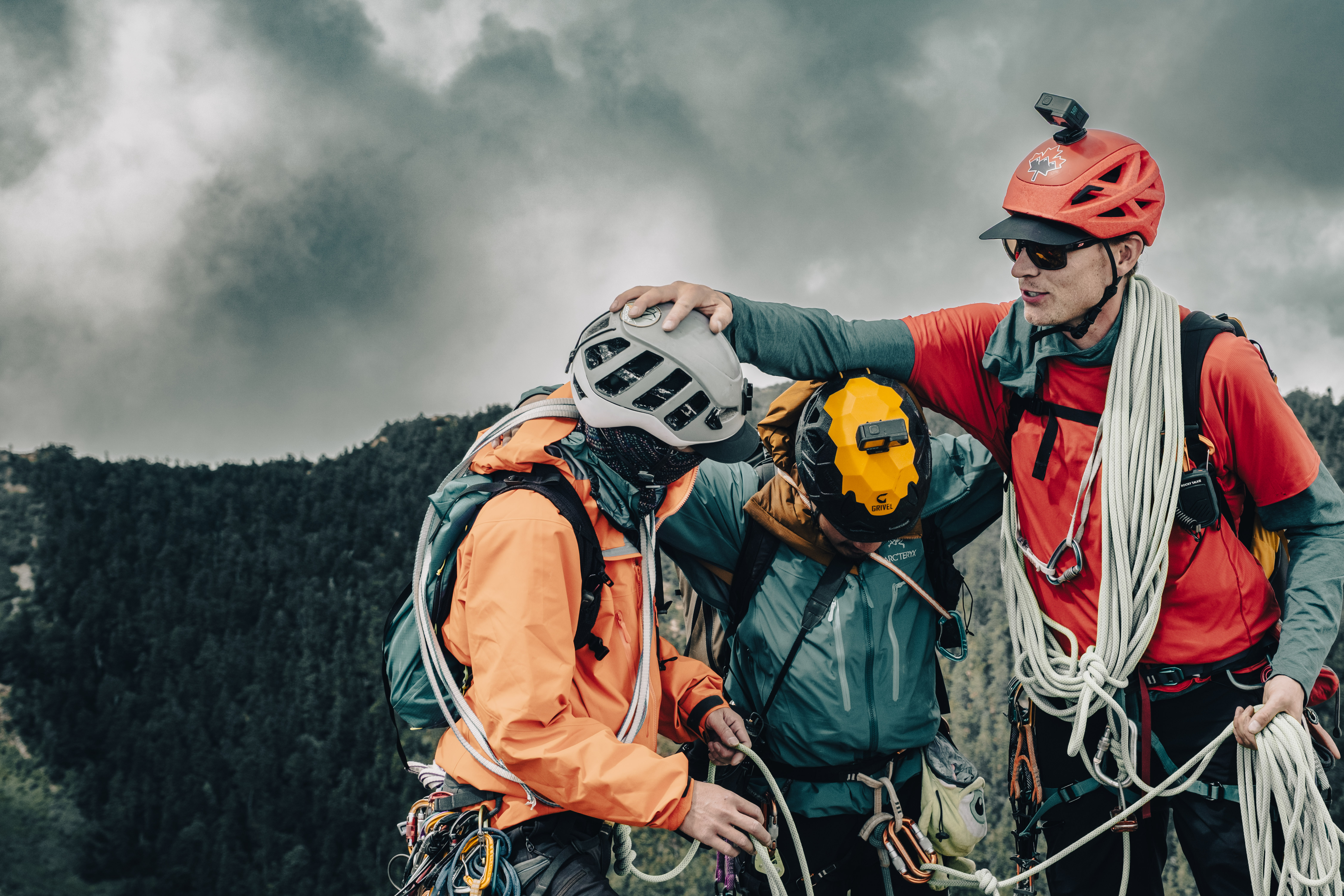
The Journey Continues
With the film having reached its final cut, Wang believes the heart of the story is the cross-cultural, life-and-death friendship between Larry and Patrick. “When people watch this film, I hope they can close their eyes, picture their absolute best friend, and bring that person into the story with them,” Wang says.
As audiences leave the theater, Wang hopes they carry away a sense of hope and the courage to keep moving forward. He also plans to bring the documentary into schools, hoping to plant seeds of adventure and imagination in the minds of the youth. “It expands your imagination. Having imagination doesn't mean you have to go out and do it, but simply possessing a rich imagination is vital for how we view the world.”
Interview & Written:Haney Wei
Translation:Beatrice Lin
Photos Courtesy of “Back on North Face”