

Can painful memories be forgotten by choice? By trying not to think of them again, not speaking of them with others, living as usual, and allowing the world to continue turning as usual—as though nothing had ever happened—they may gradually fade with time. Yet trauma becomes deeply etched in the heart precisely because the fear has never subsided and the anger has had nowhere to go. Trauma, after all, is not merely a personal matter; it cannot be healed simply through an individual choice to forget.
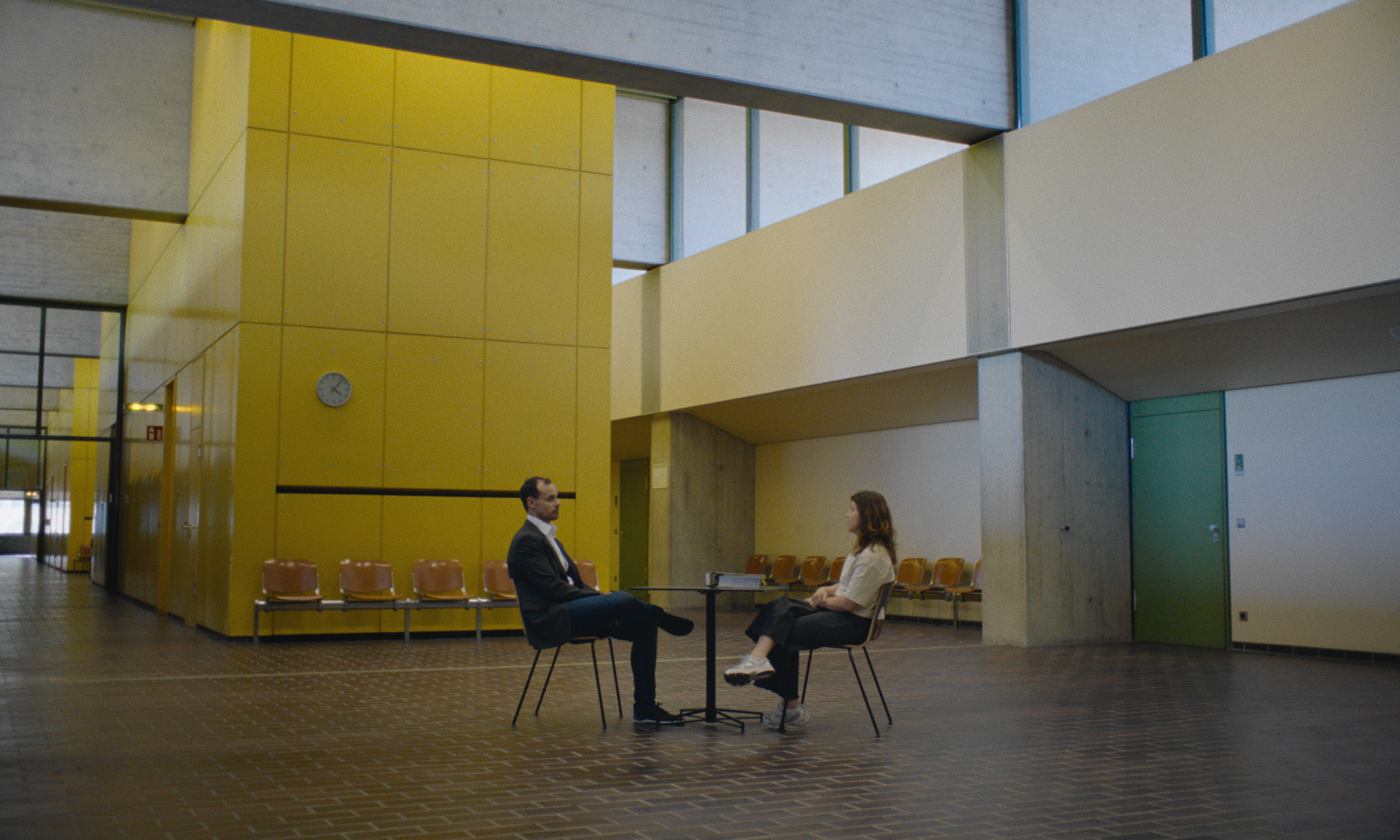
German-Brazilian director Daniela Magnani Hüller, a survivor of an attempted murder, summoned the courage fourteen years later to confront memories long sealed away. Visiting, one by one, the people connected to the incident, she completed the documentary “Sometimes, I Imagine Them All at a Party.” The director carries questions and confusion suspended for years, hoping to understand how her interviewees describe these memories. What she longs for is not an apology for what happened to her personally, but something more like an invitation for the interviewees to uncover the memories together and, through retelling, clarify the regrets left behind. In doing so, girls who, like her, once felt isolated and helpless might have a chance for the fear they faced alone to be understood.
As a secondary school student, director Magnani Hüller endured the gaze of male classmates every day—a gaze that later turned into murderous intent. Yet because a teacher saw Magnani Hüller as “cheerful and strong,” the danger was gravely underestimated. “Was I somehow responsible for what happened to me?” The question continued to haunt her. Fortunately, in the interviews we see her classmates recall how they tried to address the problem, revealing the consideration of girls who understood one another’s fear. It is this consideration that allows Magnani Hüller, as a survivor, to feel as though she were attending a party together with the girls who did not survive, standing with all girls through the act of documenting.
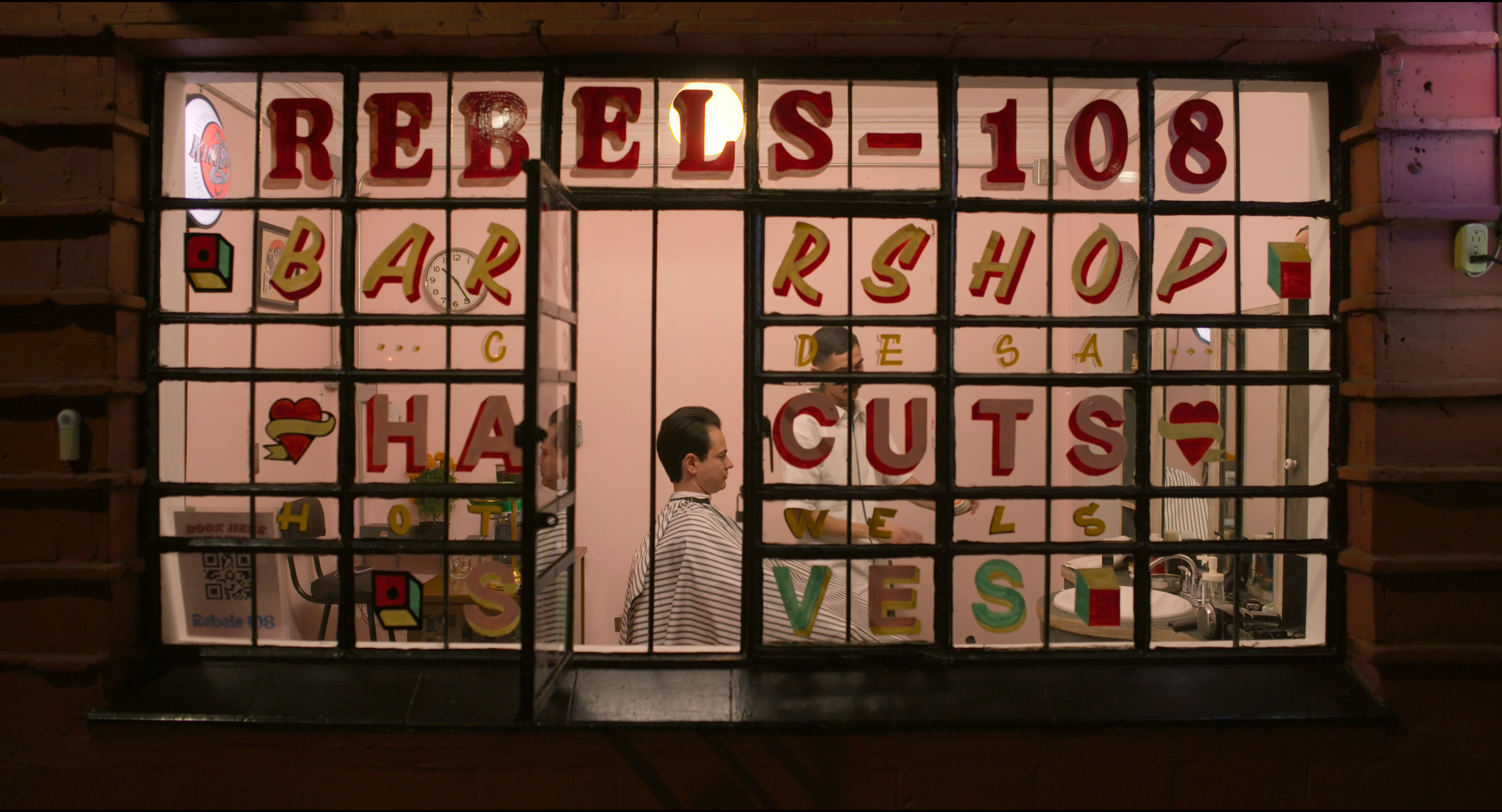
The director of The Way You See Me, M Sin Título, also suffered under the “gaze” when they were still known as Marisol and described as beautiful as an angel. In Mexican society, men enjoy the right to “appreciate” female beauty. Yet this gaze, which leaves its subject feeling exposed, forces people to remain constantly on guard against unknown violations. Men’s appreciation and women’s fear highlight stereotypical values surrounding sex and gender in Mexico. And so M left their hometown and, by taking testosterone and changing their sex characteristics and gender expression, enabled themself to reject the violence that men inflict on women’s lives. M’s seemingly personal experiment with their body is also a collective search for women seeking a way to loosen the grip of these values. They are also trying to find a path back home, because their beloved mother—who endured a lifetime of silent suffering within a patriarchal society—is there. Although their mother died during filming, they can at least dedicate this film to lives that have suffered as she did.
How can a person feel free or liberated? Magnani Hüller speaks of the soul leaving the body, while M achieves it step by step through changes in sex characteristics and the disclosure of emotion. First, they give themself the freedom to transform their sex characteristics without being constrained by a binary framework of sex and gender; they then use an androgynous appearance to express their lesbian orientation and spend extended time with lesbian friends, revealing themself with ease. As sex characteristics and emotions intertwine, M spends ten years rebuilding, little by little, an entirely new self—one free from fear.

The distance between people can sometimes feel close through empathy, as it does between Magnani Hüller and the girls; at other times, as with M and their lesbian friends, the ability to reveal genuine feelings can gather into a force that stands together against hatred. At still other times, rediscovering historical memory allows us to reunite with the people, events, and things of the past and, amid the ceaseless flow of time, recover a sense of existence that affirms who we are. In director Lynne Sachs’s “Every Contact Leaves a Trace,” six hundred business cards become channels through which she reconnects with people, events, and things that have faded from her memory. Intriguingly, she is not merely trying to piece together her memories of meeting the people whose names appear on the cards. As a person of Jewish heritage, she hopes to reacquaint herself with the history of the Holocaust and to look beyond the label of German guilt toward its more varied dimensions. Although no one in the director’s Jewish family survived the concentration camps, Sachs, who was born and raised in the United States, personally visited Berlin when she was young and came to understand history anew, unexpectedly developing an affection for Germany. This may seem deeply paradoxical, but Sachs is also concerned with Gaza and Ukraine under Russian invasion, and remains unable to forget the September 11 attacks that she experienced firsthand. We can therefore understand that what weighs on Sachs’s mind is the idea that, as human beings, we should revisit the paths of historical memory, because these paths crisscross one another and continue to shape the present and future of everyone in the world.
The camera is like a gentle companion, joining the directors as they revisit and follow their subjects, confront painful memories, look directly at threats to life, and establish their place in the world. Every mode of inquiry in these images repeatedly demonstrates how intersections between people ripple outward, affecting one another’s lives. As Sachs describes it, these intersections and influences gradually permeate the way people think. Only by continually challenging established values, then, can we help those who suffer see clearly the constraints imposed by convention and move toward liberation.
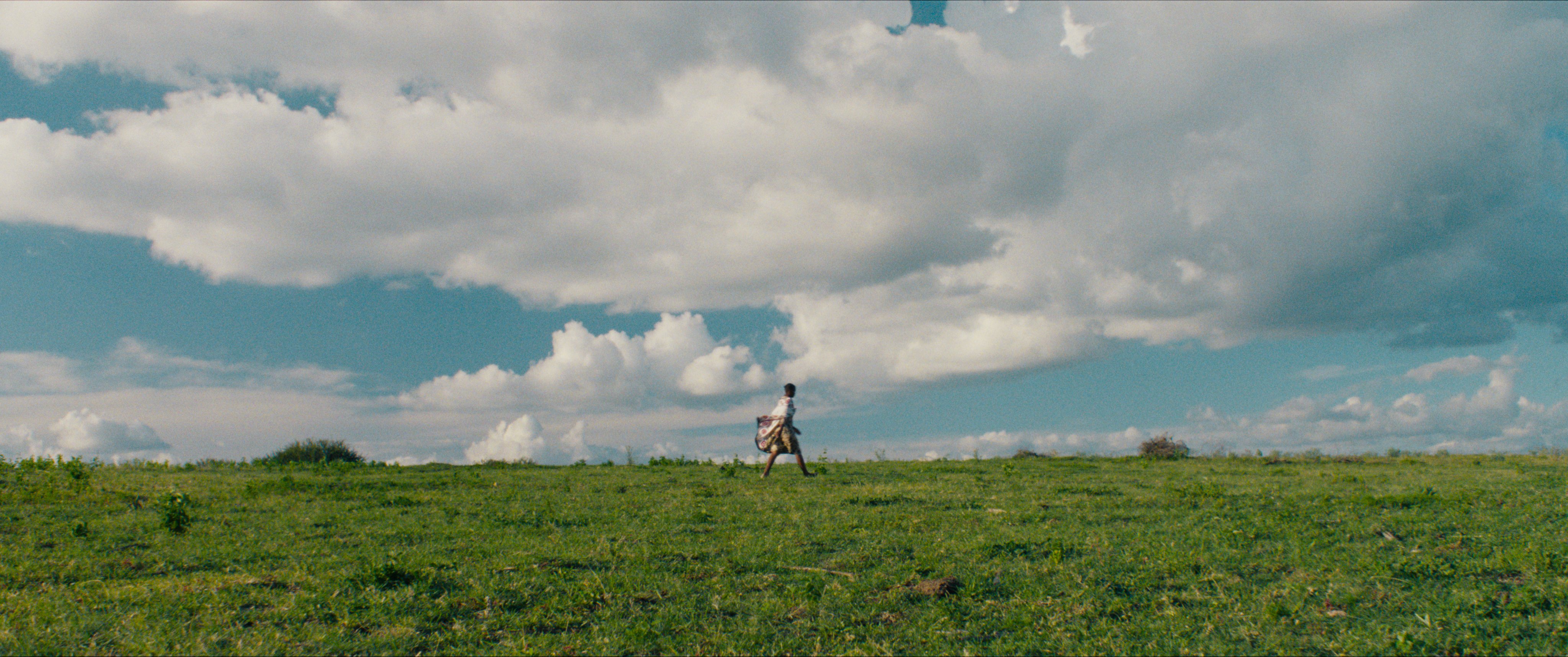
In the East African narrative film “One Woman One Bra,” we see how social conventions create difficulties for women’s identities through social relations——is it Kenyan tradition, or the modern law inherited from British colonial rule? In the film, Star, a single woman in a Kenyan village, has neither relatives nor a legally recognized spouse. As a result, she cannot obtain a land deed and receives no protection under “modern” law. Director Vincho Nchogu’s critique of the Western gaze is unmistakable. Through field research, she presents the reality of contemporary Kenya: Star’s exclusion stems from the village’s unwritten rules and colonial violence. Even after many years of Kenyan independence, the violence of the Western gaze continues to be enacted through local people.
The four films in this program speak to one another. Through the ways Magnani Hüller and M resist the gaze, we may understand Star’s decision at the end of the film as a cry announcing that she is about to rise and fight. Meanwhile, the “connections” Sachs explores bring together questions spanning different regions, ethnicities, and sex and gender identities, tracing thought-provoking “ripples of action.”
Author / Chen Jo-I
With a PhD in Literature, Chen has spent more than ten years curating film festivals. She is particularly drawn to diaspora themes and cross-genre creators, and loves exploring the minds and life journeys of artists.