

A sudden car accident brings an estranged family back together. The son loses the ability to walk, his unemployed father takes on the responsibility of caring for him, his mother struggles to hold the family together, and his young sister gradually grows up amid the upheaval. Directed by Lee Yun-chan, To Be Ordinary portrays how an ordinary family, caught between loss and gain, comes to understand one another anew—and asks how a person’s worth should ultimately be measured.
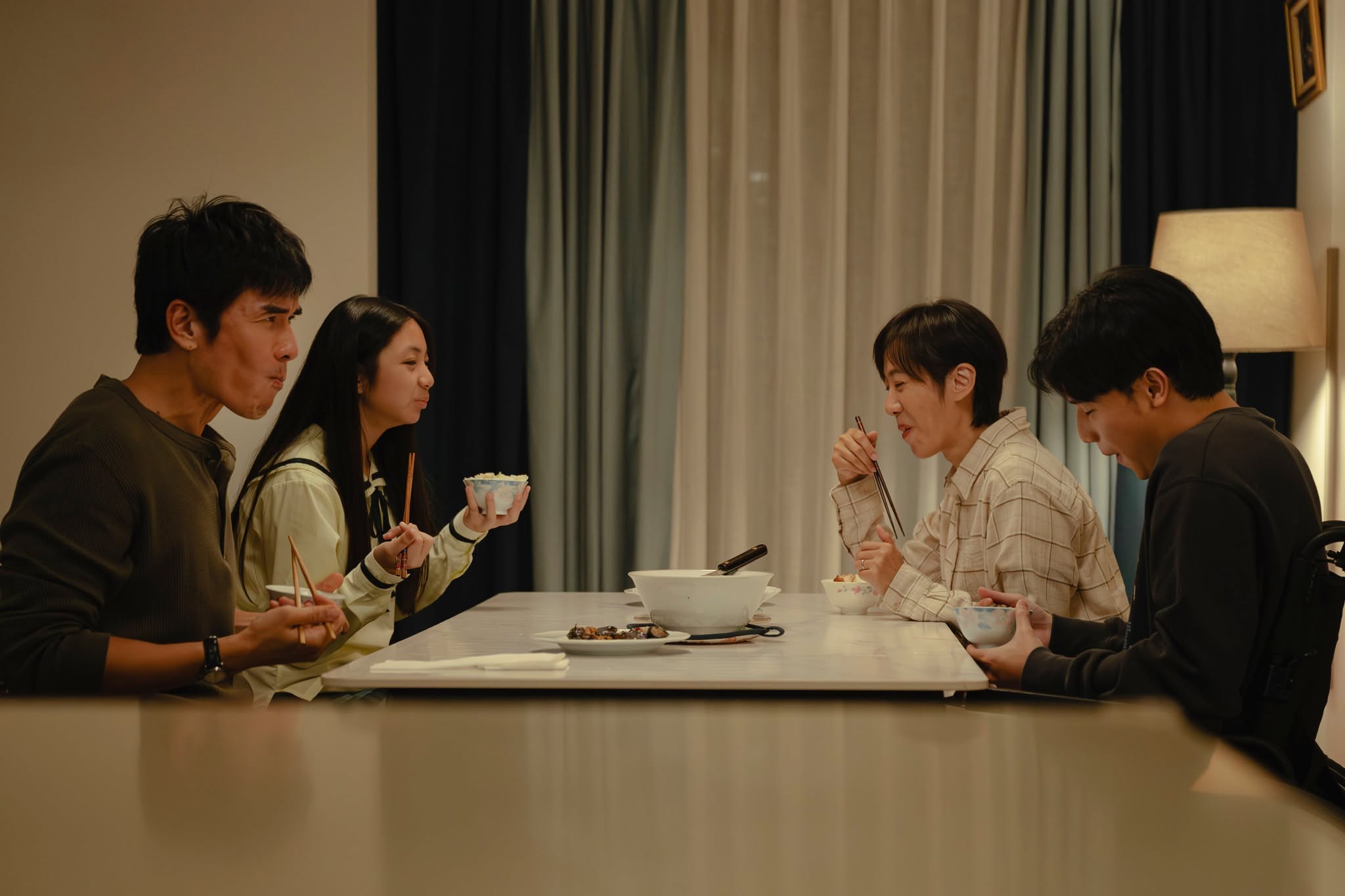
The film won Best Director at the 31st Busan International Film Festival, yet its English title is To Be Ordinary. In an interview with the Korean film magazine Cine21 in Busan, Lee explained that the family members in the film face disability, unemployment, and fractured relationships. In the eyes of others, they may seem unable to prove their worth, yet they continue striving simply to become ordinary people. She also asked: “For some people, merely staying alive is already extremely difficult. Can’t we show others a little more compassion?”
At the post-screening discussion at the Golden Horse Film Festival, the cast and crew shared an amusing story. Someone noticed a sign at the auditorium entrance that read, “Useful people may enter,” and joked: “Great. Then useless people are in trouble.” The audience burst into laughter. The joke happened to echo the question posed by the film, while the actors’ personal stories added another layer of meaning to its family narrative.
“In the film, it feels as though we took a photograph together in the same frame.”
Liang Hsiu-shen and his son Liang Cheng-chun appear together in To Be Ordinary, but in real life, their relationship was once quite distant. Liang Hsiu-shen admitted that many heartfelt thoughts had never truly been spoken. It was not until his son wrote Hsiu-shen and Me, and Sometimes Little Niu that the two finally had an opportunity to understand each other again.
At the time, Liang Cheng-chun did not dare show his father the manuscript. Liang Hsiu-shen eventually insisted on taking it, while his son hid away in Hualien, expecting his father to fly into a rage after reading it. Instead, Liang Hsiu-shen began reflecting on whether he had been too strict in raising him over the years. When his son returned home, the two were finally able to talk calmly about the past.
That change carried over onto the film set. Lee Yun-chan recalled a scene in which the script only said that the father was wrapping dumplings, without specifying any action for the son. After listening to his father speak, Liang Cheng-chun naturally sat down and began wrapping dumplings with him. Lee found this unscripted interaction deeply moving and decided to keep it in the film.
Liang Hsiu-shen said that father and son had not taken a photograph together for a long time: “In the film, it feels as though we took a photograph together in the same frame.”
Asked whether he ever regretted becoming a father, he said he had never regretted it since the day his son was born. He also told his son that regret was not allowed, since neither of them had a choice: “Let’s just keep acting together.”
“I give one hundred percent at every audition. That way, if I don’t get the part, I can accept it.”
The film’s other father and son are played by Yang I-chan and Hsieh Chan-jung. Interestingly, when Yang worked with Hsieh Tsu-wu more than twenty years ago, Hsieh Chan-jung had not yet been born. At the Busan International Film Festival this time, Hsieh Tsu-wu made a special trip to see his son’s performance. When Yang saw his longtime friend, his eyes immediately filled with tears.
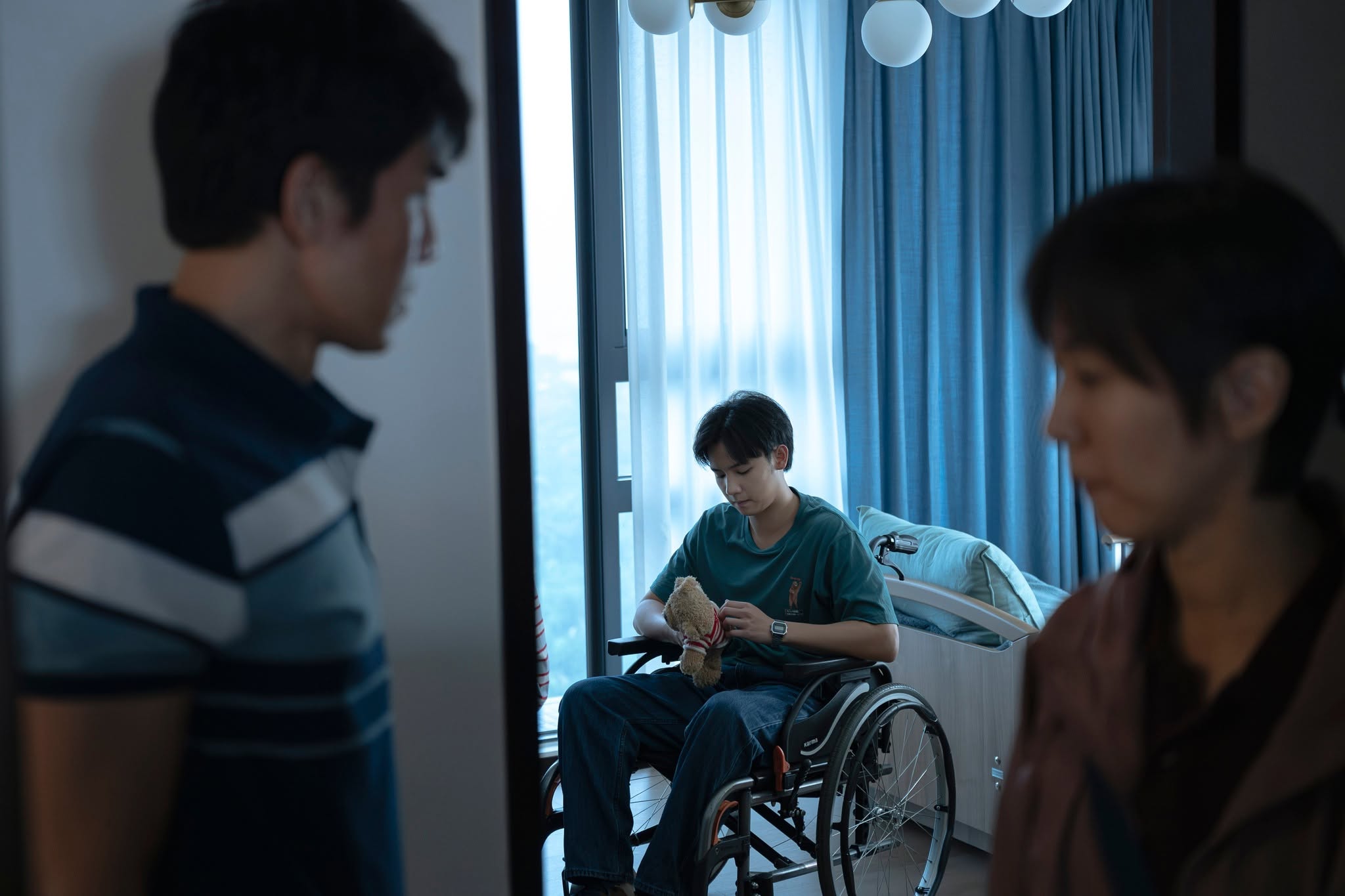
Hsieh Chan-jung once received the Golden Bell Award for Most Promising Newcomer, yet he still often works part-time between acting jobs. He has worked on concert and large-event crews, built stages, and was still working at an event for a technology company just a few months ago, where he would occasionally be recognized. Once, while the crew was having dinner at a producer’s home, a faulty light began flickering. Hsieh simply pulled tools from his pocket, took the light apart, and repaired it.
Lee Yun-chan shared that when she first met Hsieh Chan-jung, he said he had not prepared anything. Only later in their conversation did she learn that, to portray a character with a disability, he had already borrowed a wheelchair from his school and spent two or three days moving around Taipei with classmates, trying to experience how wheelchair users navigate and see the world. Lee could not help laughing: how could he call that being unprepared?
Asked whether he had been especially eager to win the role, Hsieh said that he gives his personal best at every audition: “That way, if I don’t get the part, I can accept it.”
“If you haven’t tasted that water, you cannot know whether what follows is bitter or sweet.”
Yang I-chan plays a father facing a midlife crisis. He shared that after the film screened in Japan, one audience member repeatedly asked what the character carried in the bag he always had with him, and why he kept making the same movements.
Yang guessed that the audience member might also be a father carrying pressures too difficult to put into words, and therefore wanted to use the character to understand his own circumstances.
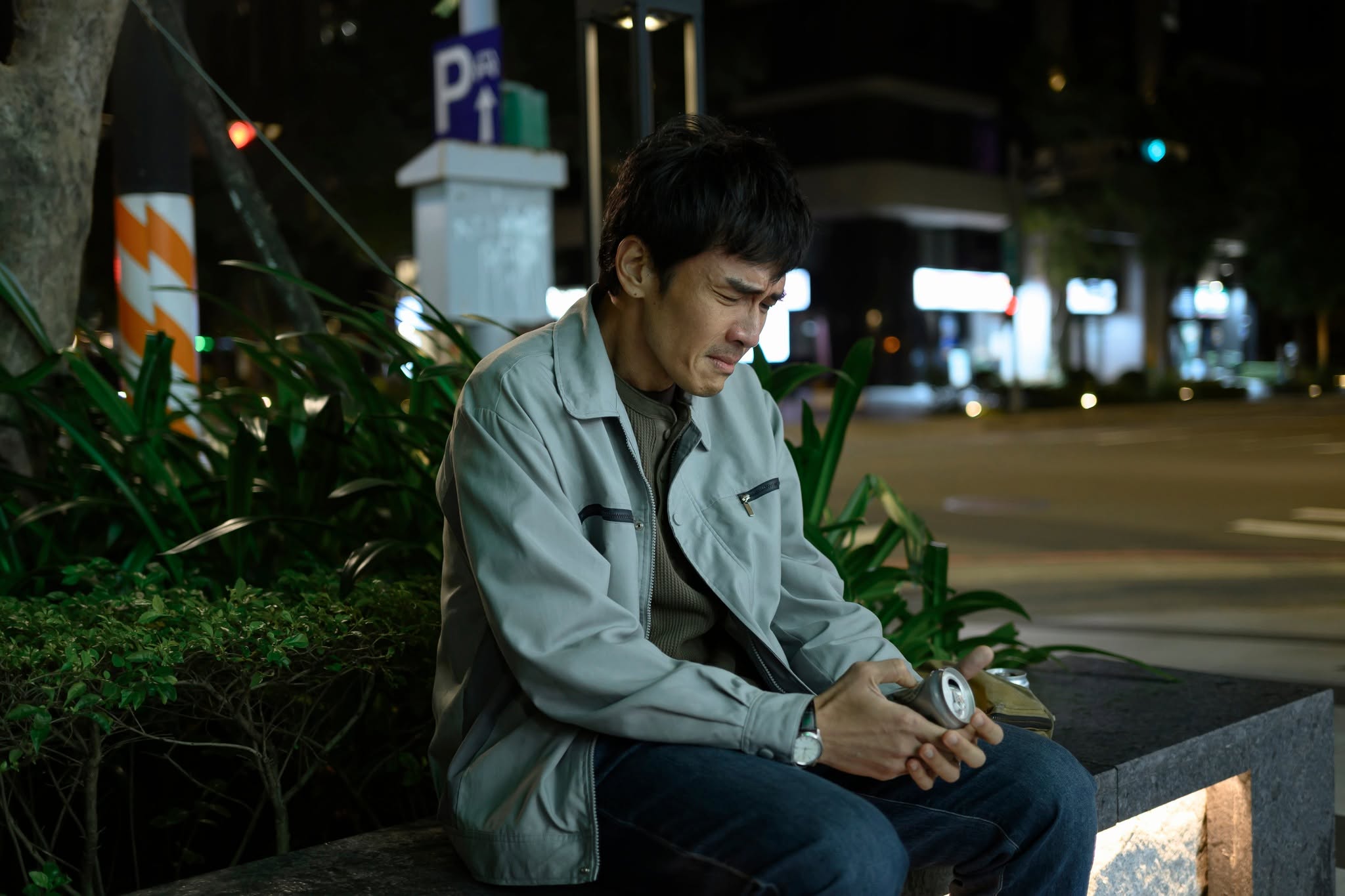
Discussing the relationship between acting and lived experience, Yang—whose mother passed away just three months ago—felt this especially deeply. He believes that an actor’s life and performance form a single living whole: “If you haven’t tasted that water, you cannot know whether what follows is bitter or sweet.” Even pain can become nourishment for a performance, though absorbing it is never easy.
Lee Yun-chan recalled that during filming, Yang would often sit alone to one side and cry after finishing a scene. She did not rush to ask what was wrong. She simply sat quietly beside him and waited until he was ready to speak.
“When each person looks into this mirror, they may see themselves reflected, or they may think of someone else.”
During a joint interview, I asked director Lee Yun-chan when in her life she had felt most useless. She thought back to the first few years after giving birth. Her child would not sleep at night, and even after holding the child for an hour or two, nothing helped. Unable to rest herself, Lee—always optimistic and convinced that she could do anything well—experienced a profound sense of helplessness for the first time.
That experience also echoes the circumstances explored in To Be Ordinary. In her Busan interview, Lee said that the film’s seemingly incomprehensible characters and choices were drawn from what she had witnessed in real life. During production, she gradually came to understand why people she had once been unable to agree with made the decisions they did.
She described To Be Ordinary as a mirror: “When each person looks into this mirror, they may see themselves reflected, or they may think of someone else.”
When life no longer unfolds as expected, some people strive to be good fathers, some try to understand their families, and others simply do their best to get through the day before them. The film does not rush to judge these characters as right or wrong. Instead, it allows audiences to see the helplessness and choices each of them faces. Perhaps, rather than asking whether a person is useful, what matters more is whether we are willing to understand the life they have lived.
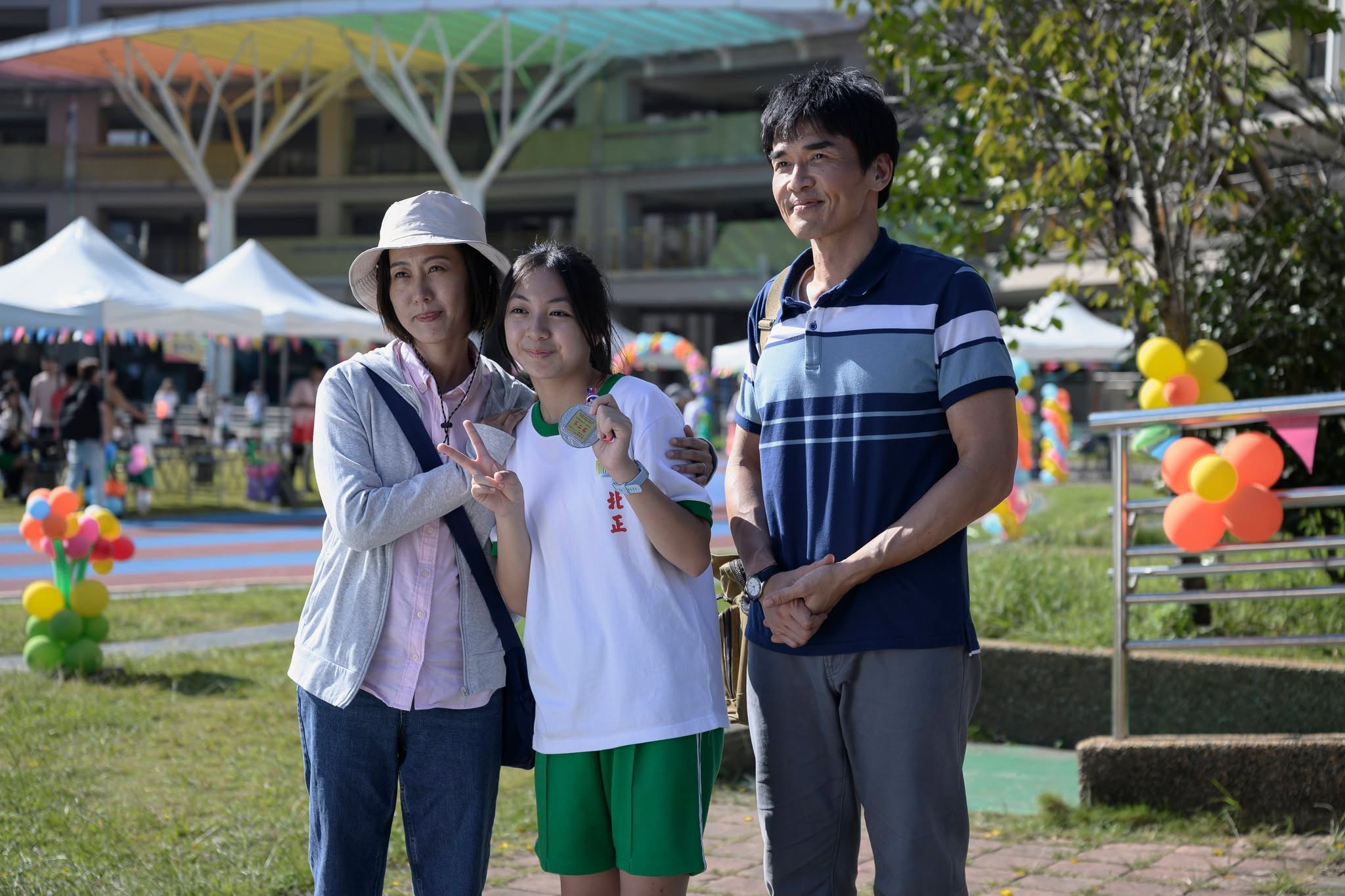
Text / Ruru Shih
Film stills / Reproduced from the To Be Ordinary Facebook page