

On November 21, the day before the 63rd Golden Horse Awards ceremony, nominees from Taiwan, Hong Kong, Singapore, Malaysia, Japan, and elsewhere gathered at W Taipei for the nominees’ luncheon. Temperatures in Taipei had plunged over the previous two days, making “It’s so cold” the most common greeting among attendees, but the atmosphere was relaxed and lively. Over more than an hour of interviews, there were reunions, tributes, and plenty of jokes. The competition would not begin until the following evening; for now, the filmmakers came together in celebration.
Warmth amid the cold
Three of this year’s five Best Leading Actress nominees are from Hong Kong. When Chung Suet-ying, Jennifer Yu, Angela Yuen, and Yeo Yann-yann appeared together, Yeo broke the ice by joking that the contest was “tense and combative—we’ve been beaten black and blue.” The three Hong Kong actresses are friends, and there was no awkwardness despite competing in the same category. Yuen said they had no desire to defeat one another. At a time when making films in Hong Kong is difficult and resources are limited, being able to create work audiences enjoy and arrive at the Golden Horse Awards together was itself “a proud achievement.”
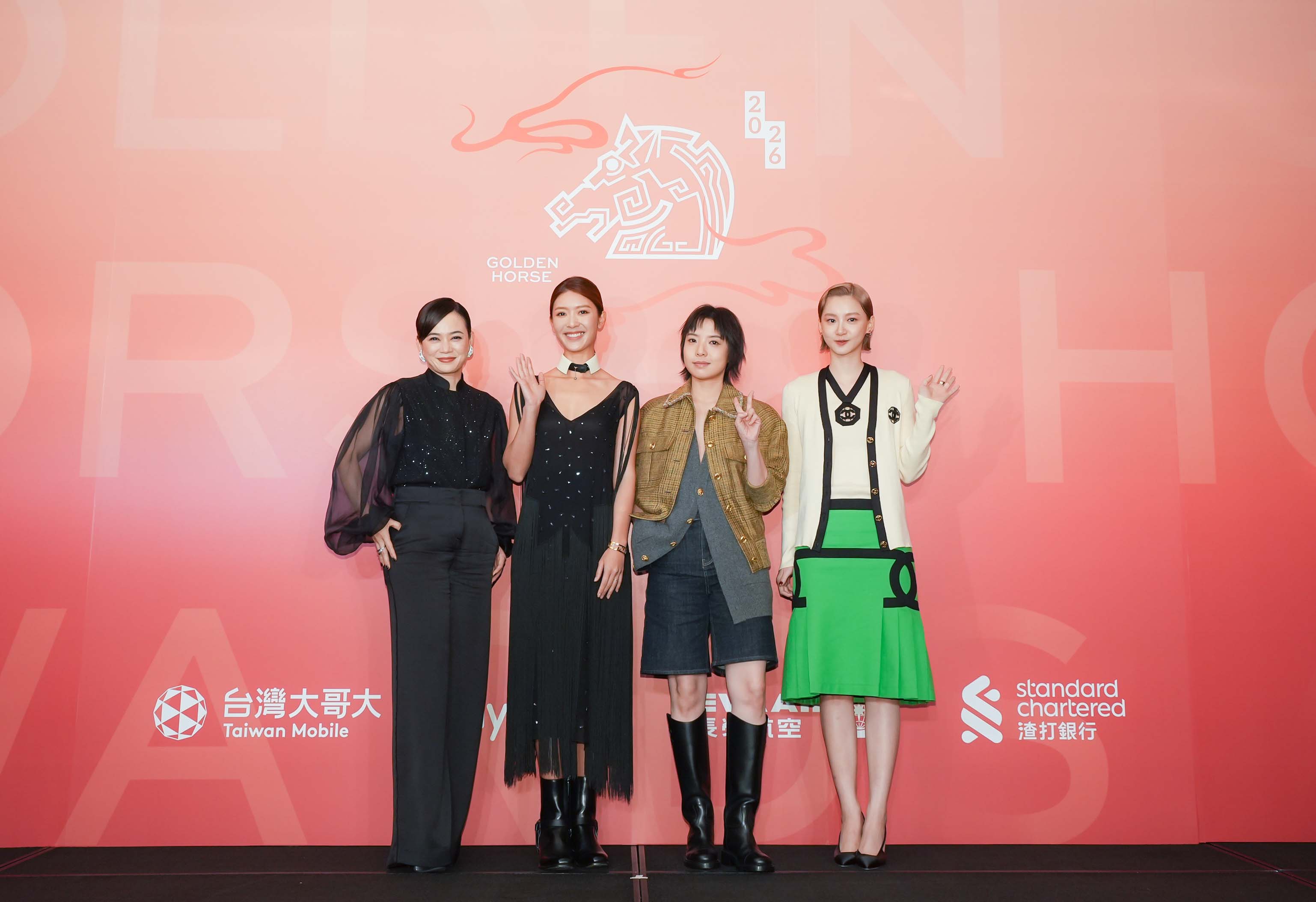
In private, the four prospective Best Actress winners did not discuss one another’s films; they talked about Taipei’s sudden drop in temperature. Onstage, Chung Suet-ying quietly slipped a hand warmer to Angela Yuen, who immediately exposed her as “such a strange person.” Chung replied that she was simply “afraid other people might be cold.” The others joined in, saying they would all be counting on her when they walked the red carpet in thin gowns the next day. Chung laughed that she should seize the opportunity to “make a fortune.”
Beyond the jokes, each actress also spoke about her work. Chung Suet-ying, who won Best Leading Actress two years ago for The Way We Talk, is nominated again this year for We Are Born Good. The film follows two ordinary city dwellers and had screened at the Golden Horse Film Festival only the previous day, so many audience members had not yet seen it. She felt especially honored that the jury had noticed her work. The jazz arrangement of the Golden Horse theme playing in the ballroom made Jennifer Yu feel as though she were back on the set of Double Happiness. It was her first leading role in a Taiwanese film, and she said the people who made it felt like a family. Her gown the following evening would also echo her character’s bridal look. Nominated again after four years, Angela Yuen said that actors improve every day but also lose something every day. She might not be able to make the same film she made four years ago today, but had she encountered Afterpiece then, she would not have the confidence she has now. As for her look, she offered only one clue: “It’s going to be breathtakingly beautiful.”
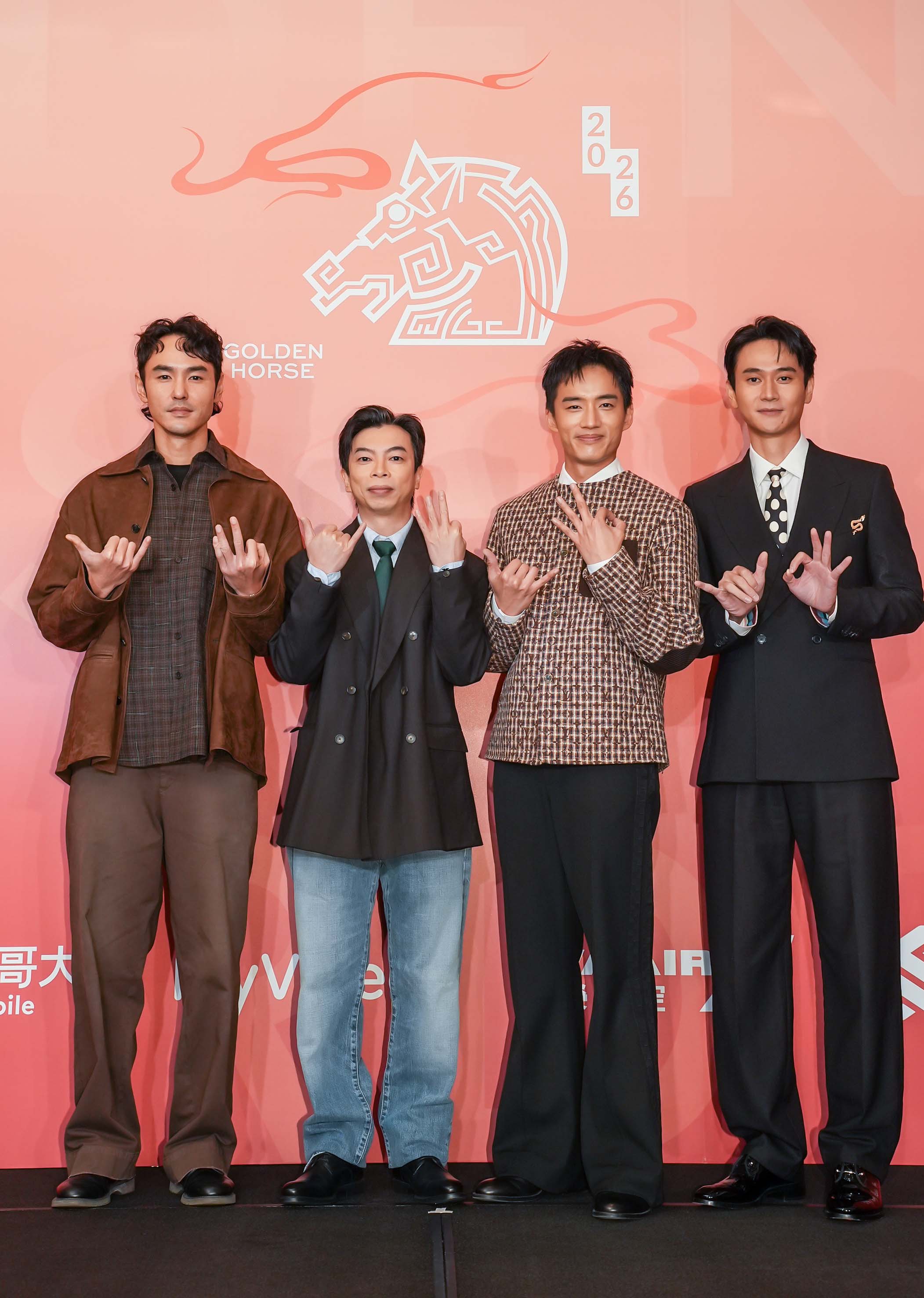
The Best Leading Actor group was equally free of tension. Yeung Wai-lun, Ethan Juan, Jack Tan, and Liu Kuan-ting—described by the media as the “group of death”—merely exchanged glances at the luncheon. For Juan, the Golden Horse Awards feel more like a gathering where he can reunite with old friends. This year, he is competing for Best Leading Actor for the third time with Japanese director SABU’s Arrested Memory. At the beginning of production, the two did not share a language and could communicate only by observing each other’s eyes and reading each other’s emotions; they gradually developed a rapport. Liu Kuan-ting, nominated for Double Happiness, admitted that he was nervous despite already being a two-time Golden Horse Best Supporting Actor winner. He described the Golden Horse as a brilliant yet distant presence in every filmmaker’s heart. Asked what he wanted to say to his onscreen “wife,” Jennifer Yu, he replied that she was someone who made him feel secure. The host immediately quipped that arriving at the Golden Horse Awards together meant they already had “double happiness.”
Bonds across time
The luncheon also brought together several relationships spanning many years. Yeo Yann-yann earned another nomination for We Are All Strangers, the concluding chapter of Anthony Chen’s “growing-up trilogy.” When they first attended the Golden Horse Awards together in 2013, both thought it would be their only time. More than a decade later, they have become “family behind the camera.” She described this nomination as “coming full circle,” though the trilogy’s conclusion inevitably brought a trace of sadness. She hopes that every ending can lead to a new beginning. Asked whether there might be another trilogy, she laughed and said to “ask the director again in five or six years.” Chen, who also attended the luncheon, said the Golden Horse Awards had witnessed him in his twenties and thirties; returning now in his forties “feels like coming home.”
An even greater span of time belongs to Judy Ongg. A Golden Horse Best Actress winner in 1972, she returns after 54 years with Sunshine Women’s Choir. Having devoted more of her energy to singing and painting over the years, she returns to the big screen without makeup and with a full head of white hair to play a grandmother. She admitted to feeling nervous but regards the challenge as a compulsory lesson in life: “You never know when an opportunity will arrive, so you must always be prepared.”
Hong Kong theater writer-director Kearen Pang grew up watching Ongg’s work. When she saw Ongg’s new film in a cinema two months ago, she exclaimed inwardly, “She’s back.” Now being nominated alongside her feels like “successfully meeting an idol.” Accustomed to writing and directing her own work, Pang is nominated as an actress this time for We Are Born Good. What moved her most was that this was not her own creation, but the work of a director who saw and believed in her. She had always assumed that if she ever reached the Golden Horse Awards, it would be in a behind-the-scenes role. Lin Pin-tung, who became the youngest Best Leading Actress winner in Golden Horse history three years ago with Trouble Girl, is nominated again this year for Girl. Seated beside Ongg at the luncheon, she was praised as “so adorable.” Generations separated by half a century now stand together on the same Golden Horse stage.
From the margins to center stage
Many nominees’ stories are about years of waiting. Yeung Wai-lun’s only previous leading role was as a serial killer; this time, he finally gets to play a “normal person.” He thanked his We Are Born Good co-star Chung Suet-ying for sharing her experience and looking after him throughout the journey, and said he hoped she would take home the award. Lim Wee Boon spent years playing minor television roles in Singapore, often receiving only a few scattered pages of script and needing merely to deliver his lines correctly. We Are All Strangers was the first time he received a complete screenplay and could accompany a character through an entire journey. He had previously seen the other nominees beside him only in magazines and on the big screen. Standing alongside them now felt “unbelievable.” Jack Tan has progressed from supporting actor to leading actor and regards this nomination as the first milestone of his life. He also said that cinema has made life more meaningful.
After decades of perseverance, Tin Kai-man said the nomination proved that he had been right not to give up. Seeing how this year’s field was “filled with hidden dragons and crouching tigers” had already diminished his confidence. He lamented that, unlike younger people, he did not “still have a long road ahead,” making it all the more important to savor the present moment. Anson Kong, better known as AK and originally a member of an idol group, made time amid concert preparations to travel to Taiwan. He acknowledged that the public often views idols who act through tinted glasses, but his team approaches every film opportunity seriously. He hopes audiences can set aside their preconceptions and return their attention to the work itself.
The laughter onstage never stopped. When Tin Kai-man was complimented on his looks, he hurriedly passed the word “handsome” to AK, saying otherwise he might be “slashed” by the fans outside. AK played along by collapsing to the floor, then did it again for the photographs. Asked whether he would make himself look ugly to steal the scene, Tin joked: “Ugliness is natural; there’s no need to pretend,” adding, “but I’m very gentle.” Huang Kuan-chih, the only Taiwanese Best Supporting Actor representative present, belongs to a generation that grew up watching Tin’s Hong Kong films and recited a classic line on the spot in tribute. He joked that when he attended the Golden Bell Awards last year, his suit had two cutouts and he ended up “empty-handed twice over”; this year, he would be covered from head to toe. He had watched many films at the Golden Horse Film Festival that week and said cinema had given him countless “magical moments.” He felt extraordinarily fortunate to be part of telling stories.
New performers and directors
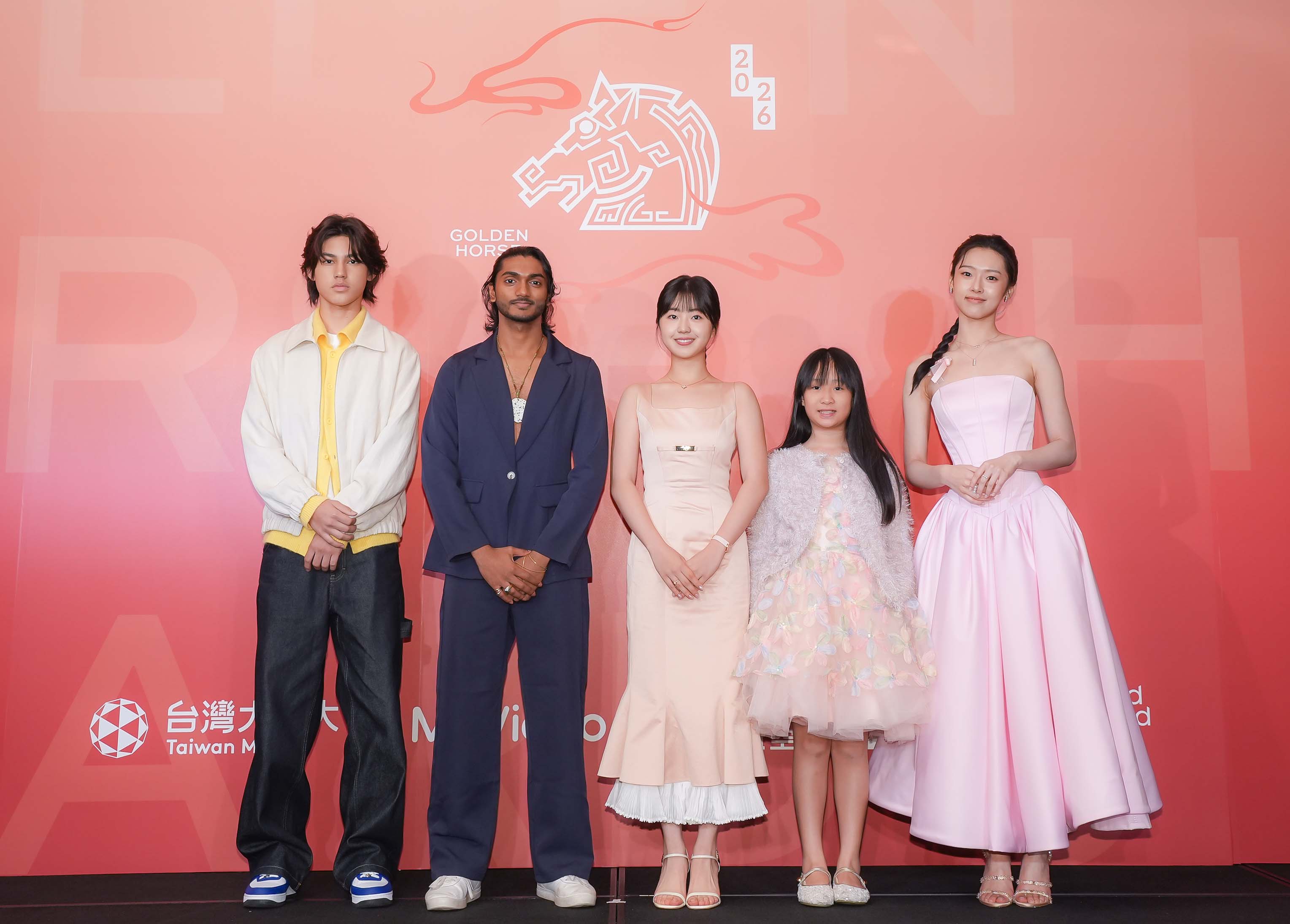
The Best New Performer nominees arrived with youthful freshness. Nandagopall Mohan, nominated for SAYANG, thanked the media in English and said he was trying to absorb everything about the day into his heart. He also made a point of saying he was a fan of Wang Hsuan-ching. Bai Xiao-ying, nominated for Girl, admitted that watching her own performance still felt unfamiliar. First-time actor Wang Chieh-teng could not hide his nervousness, though he recalled that filming had felt “like playing.” Ten-year-old Wang Hsuan-ching made a cheek-heart gesture for the cameras, brimming with energy. She also revealed that she had been only seven while filming Bubblegum Girl and could not stop crying when she had her hair cut for a role for the first time.
Among the directors, Japanese filmmaker SABU said directly that he loved Taiwan and hoped to have another opportunity to work there. Tom Shu-yu Lin, nominated for the opening film The Age of Goodbyes, planned to approach the ceremony with equanimity.
Two awards announced ahead of the ceremony
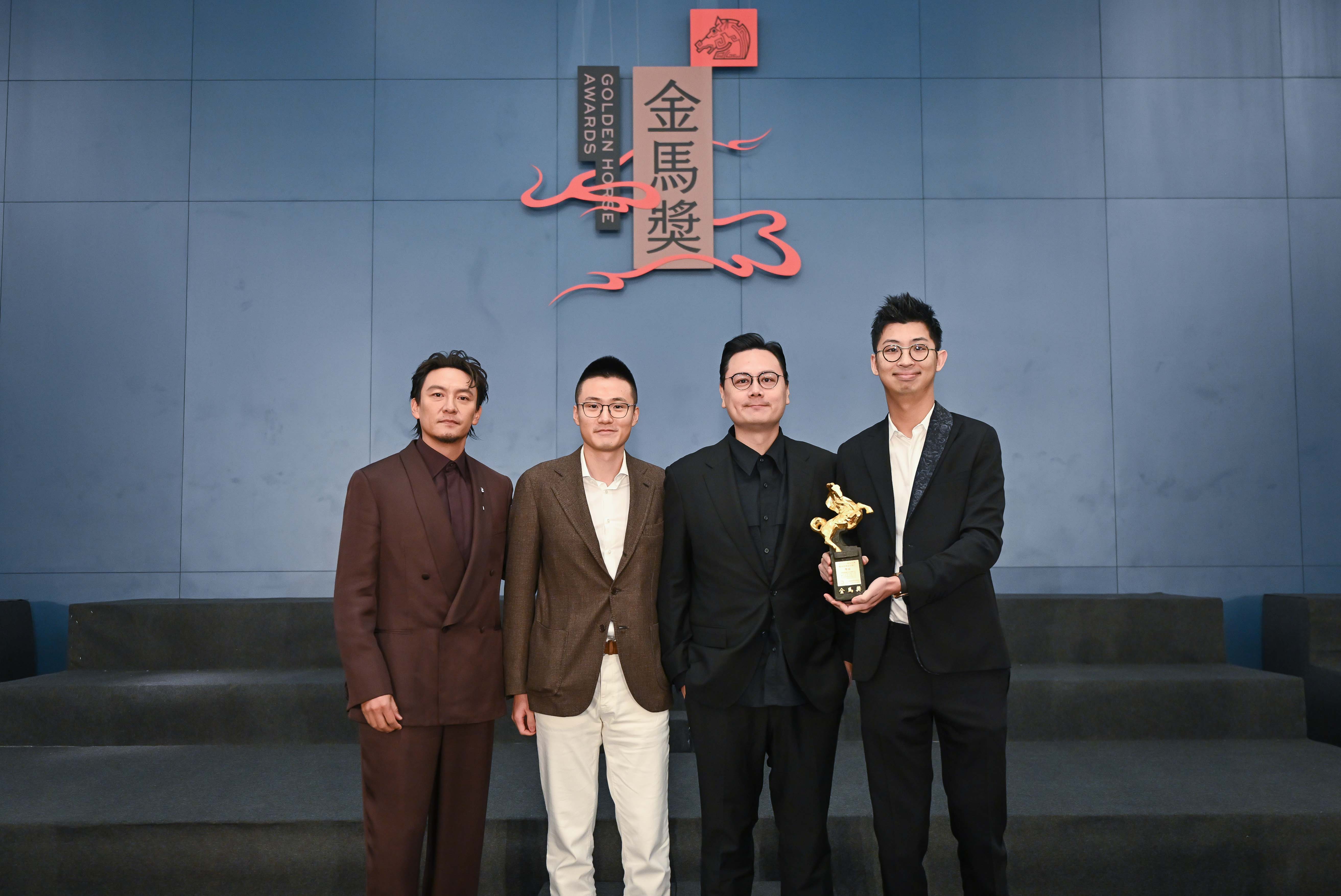
Two awards were also announced at the luncheon. The Audience Choice Award, determined by audience jurors who watched all five Best Narrative Feature nominees over two consecutive days before voting, went to Double Happiness. The film had already sparked a moviegoing craze during its Lunar New Year release and has now received further recognition from audiences. The FIPRESCI Prize, open to directors’ debut features nominated for any Golden Horse Award, went this year to Shu Qi’s feature directorial debut Girl. The jury included the artistic director of the Helsinki Cine Aasia film festival and critics from South Korea and Taiwan. They praised the film for its delicate, restrained portrayal of a girl’s coming of age. Its poetic cinematography and precise mise-en-scène recreate the humid, oppressive atmosphere of the late 1980s, reflecting the characters’ silent trauma within their confinement while leaving audiences space for lingering reflection and emotion. Shu Qi was unable to attend because of work commitments and was represented by the film’s producer.
The 63rd Golden Horse Awards ceremony will take place on the evening of November 22 at the Taipei Music Center, hosted by Will Or. After the greetings, group photographs, and jokes of the luncheon, the nominees leave with anticipation and nerves as they await the results to be revealed the following night.
Written by Cammy Hou
Images courtesy of the Taipei Golden Horse Film Festival Executive Committee