

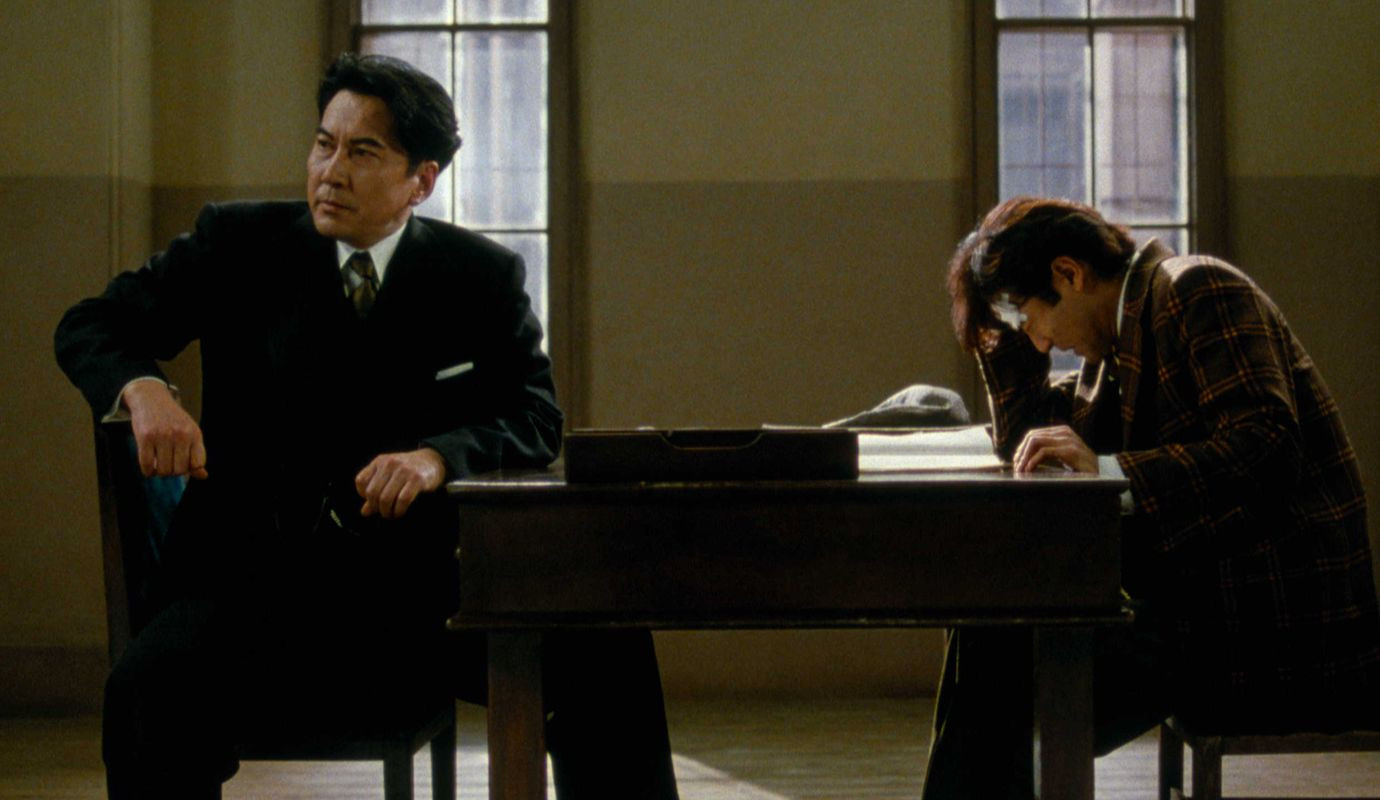
In University of Laughs, Tsubaki is a playwright writing comedy in wartime Asakusa. Every day, he brings his revised script to the censor and returns with a new set of requested changes. After so many revisions, even the censor, who initially understands nothing about humor, begins suggesting lines for him. Koki Mitani said that if he had lived in that era, he would probably have done the same as Tsubaki: making every requested change while finding ways to make the play even funnier. When he used to write television series, he faced similar problems every week.
Following a 2026 Golden Horse Film Festival screening of University of Laughs, Mitani met the audience at MUVIE TITAN in a session moderated by Detention director John Hsu. Hsu said that when he first saw the film, what moved him most was watching the humorless censor slowly become infected by comedy, as though coming alive. Mitani then discussed the origins of the story, explaining that it began with the demands television producers had made of him.
“I suppose this is my mission as a screenwriter.”
University of Laughs began as a radio drama and was later adapted for the stage. It has been translated into different languages and performed around the world. In Japan, the story has also been adapted into rakugo and made into a film. Mitani said that among his works, University of Laughs has enabled many people to encounter this story through its different forms.
The story began when he read in a book that a theatrical censorship system like this had actually existed in prewar Japan.
“I began imagining how I would create if I had lived in that era. What came to mind were the things I encountered while writing television dramas.”
A one-hour television drama leaves only about forty-five minutes once the commercials are removed. A screenwriter must tell the entire episode’s story within that time while also dividing the plot into sections around the commercial breaks.
Sponsors’ requirements were even more specific. Mitani said that while writing Furuhata Ninzaburo, a pharmaceutical company was among the sponsors, so the producer instructed him: “You absolutely cannot have anyone murdered with medicine.” When an automobile company sponsored the show, no one in the story could be run over by a car. If two actors did not get along, the producer would also insist that they never appear in the same scene.
“If I changed the story exactly as the producer said, it would become increasingly boring, and I hated that. So every week I tried to satisfy every one of those conditions while still writing an entertaining drama.”
Those experiences eventually became University of Laughs. Mitani said that the film’s playwright, Tsubaki, represents his ideal image of a screenwriter.
“No matter how many restrictions the state imposes, he accepts them and still manages to write something interesting within those conditions. I suppose this is my mission as a screenwriter.”
Speaking about his own experiences of having scripts altered, Mitani first asked everyone not to imagine that he spends every day in misery. He is actually quite happy as a screenwriter. He then admitted there had indeed been one production whose finished version disappointed him so deeply that he asked the producer to remove his name from the credits.
“I genuinely regret that now,” he said. “I believe a professional screenwriter must never say something like that. Whatever the final result becomes, I am still the one who wrote the script. Now I feel that, in the end, I have to accept it.”
Hsu noted that in University of Laughs, Tsubaki initially makes the revisions reluctantly, yet the story improves with every rewrite. As a creator, Hsu found that especially moving.
“That is certainly the ideal,” Mitani said, “but it does not work out so smoothly every time.”
“I think human beings are fundamentally creatures who lie.”
The moderator observed that Mitani often writes characters who speak stubbornly even though their hearts have already gone in another direction. He described them as “tsundere” and asked why Mitani enjoyed writing such characters.
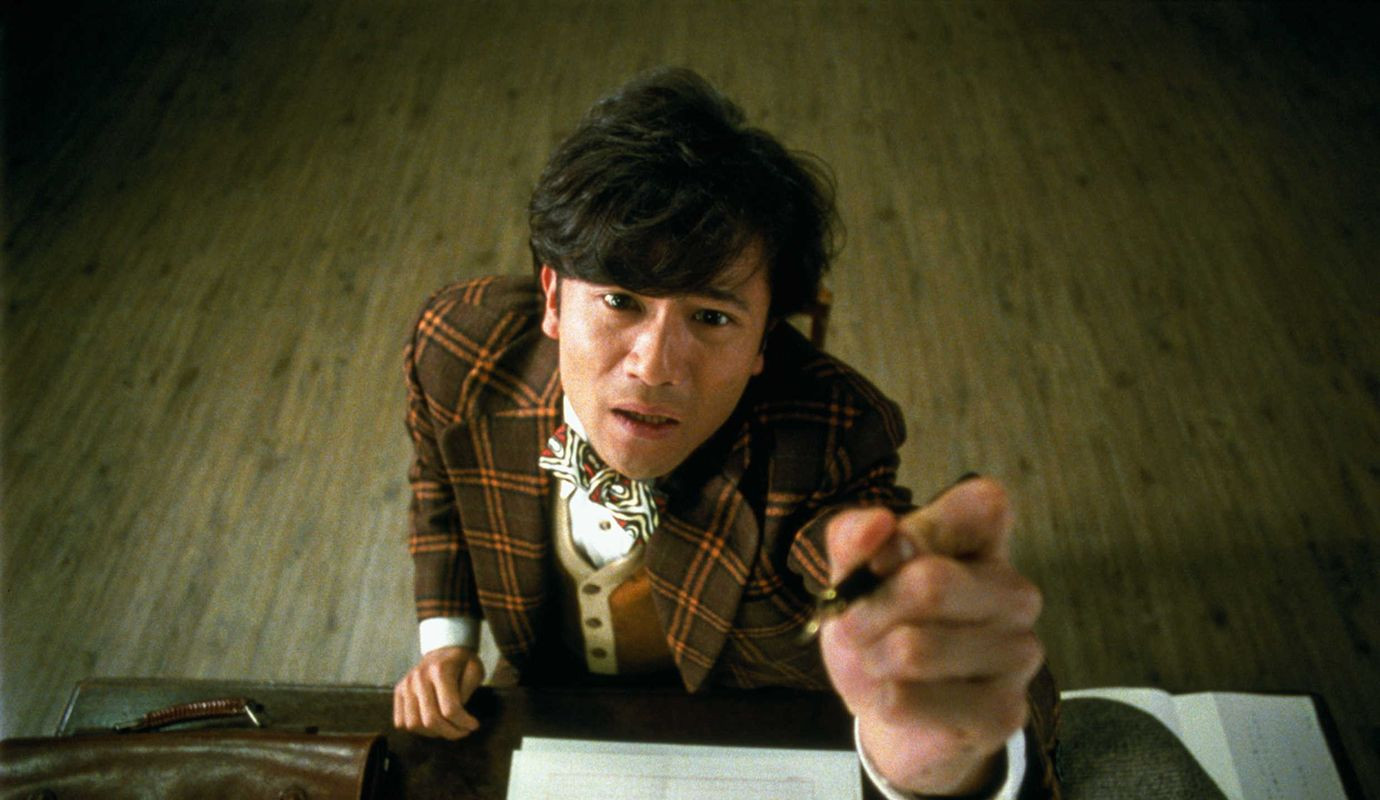
“I think human beings are fundamentally creatures who lie,” Mitani said. “That is where the humor in my comedies comes from.”
Sometimes, he explained, lying simply means that what a person says aloud differs from what they are thinking.
“For example, I am standing here talking to everyone about films, but what I am actually thinking is that I ate too many xiaolongbao earlier. They were so delicious that I ate a huge amount, and now I am extremely sleepy.”
The censor in University of Laughs experiences moments like this as well. He says that one scene cannot be performed and another line must be changed, but gradually becomes increasingly concerned with whether a line is funny. When the moderator asked why these two characters could make audiences laugh for nearly two hours and still leave them reluctant to say goodbye, Mitani began discussing the two stage actors who first performed the play.
“Different actors allow the story to change in many ways, and I think it should change with them.”
Mitani said that when he wrote the radio drama, both characters existed entirely in his imagination. Only when the story moved to the stage and actors became involved did he have specific people in mind. He could then imagine which actor would make a particular line funny and what expression the other actor would have upon hearing it.
“When it moved to the stage, I wrote the story for those two actors. I think the ending took that form because they inspired it.”
For the film version, Koji Yakusho and Goro Inagaki joined after the story had already been written. Once the casting was finalized, Mitani returned to make slight adjustments to the dialogue, imagining how Yakusho would deliver a line and how Inagaki would respond.
When the stage play was later revived, Seiyo Uchino played the censor and Koji Seto the playwright. The age difference between them made them seem like father and son. During rehearsals, Mitani gradually began to see something resembling a father-son relationship between the two men in the censorship office. After a month of rehearsals, the ending changed as well. “Different actors allow the story to change in many ways, and I think it should change with them.”
As for how the new version ends, he kept the answer to himself.
“I cannot say it here now,” he said, adding that he hoped to bring the stage production to Taiwan one day.
“If no one gave me a date by which I had to finish, I would probably keep writing the same story forever.”
An audience member noted that while discussing the new stage production, Mitani had said that although he now has greater creative freedom, he still imagines a censor in his mind and sets himself difficult problems to stimulate his creativity. The audience member wanted to know whether a screenwriter accustomed to first asking, “How will other people demand that I change this?” might unconsciously use those demands to censor their own work. Where is the boundary between that practice and creative compromise?
The question also returned to University of Laughs. Comedy gradually allows the playwright and censor to understand one another, and audiences may consequently come to like the censor. Does that also weaken the film’s critique of bureaucracy and authoritarianism?
After listening, Mitani said: “Isn’t that too difficult?”
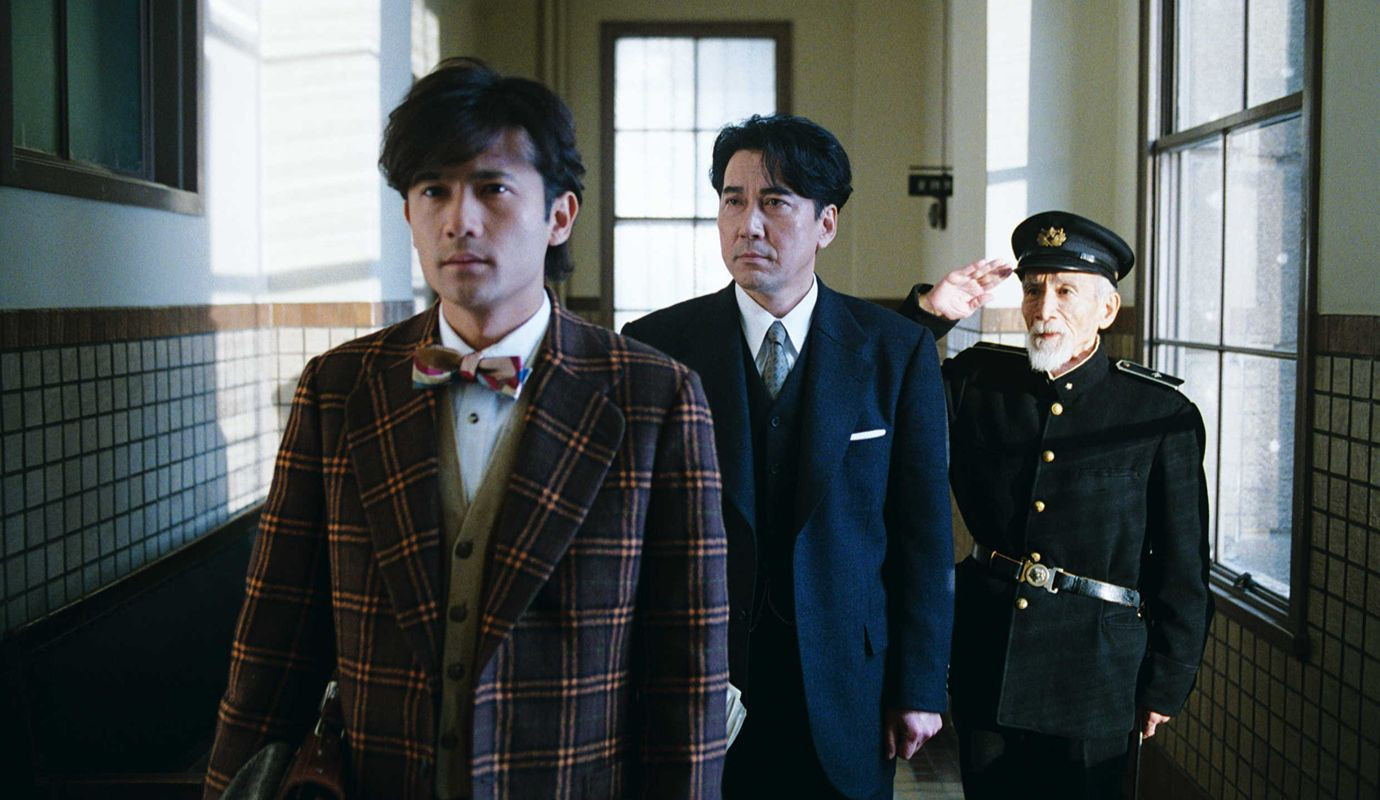
He began with the first question. He now has much more freedom than when he entered the profession and can create what he likes, but he still needs certain conditions in order to write. “I am someone who cannot write a story without constraints,” he said. A deadline is one example. “If no one gave me a date by which I had to finish, I would probably keep writing the same story forever.”
When no one sets him a challenge, he creates one himself. While writing the historical drama Shinsengumi!, he prohibited himself from using narration for the entire year. For Sanada Maru, he set a different condition: he would write only events personally experienced by members of the Sanada family. No matter how famous a historical event might be, if the family did not experience it, he would leave it out.
An audience member who loved Sanada Maru then said they had eagerly anticipated the scene in which Sanada Nobushige charges into the Tokugawa camp and confronts Tokugawa Ieyasu. Why, they asked Mitani, did he ultimately choose not to show the scene in full?
“Because I wanted those who watched it to carry it in their hearts forever.”
“I do not think any laughter remains unfaded forever.”
During the audience Q&A, someone quoted a passage from one of Mitani’s books: comedy fades easily with its era, and one day he would have to determine what does not fade. Had he found an answer over the years?
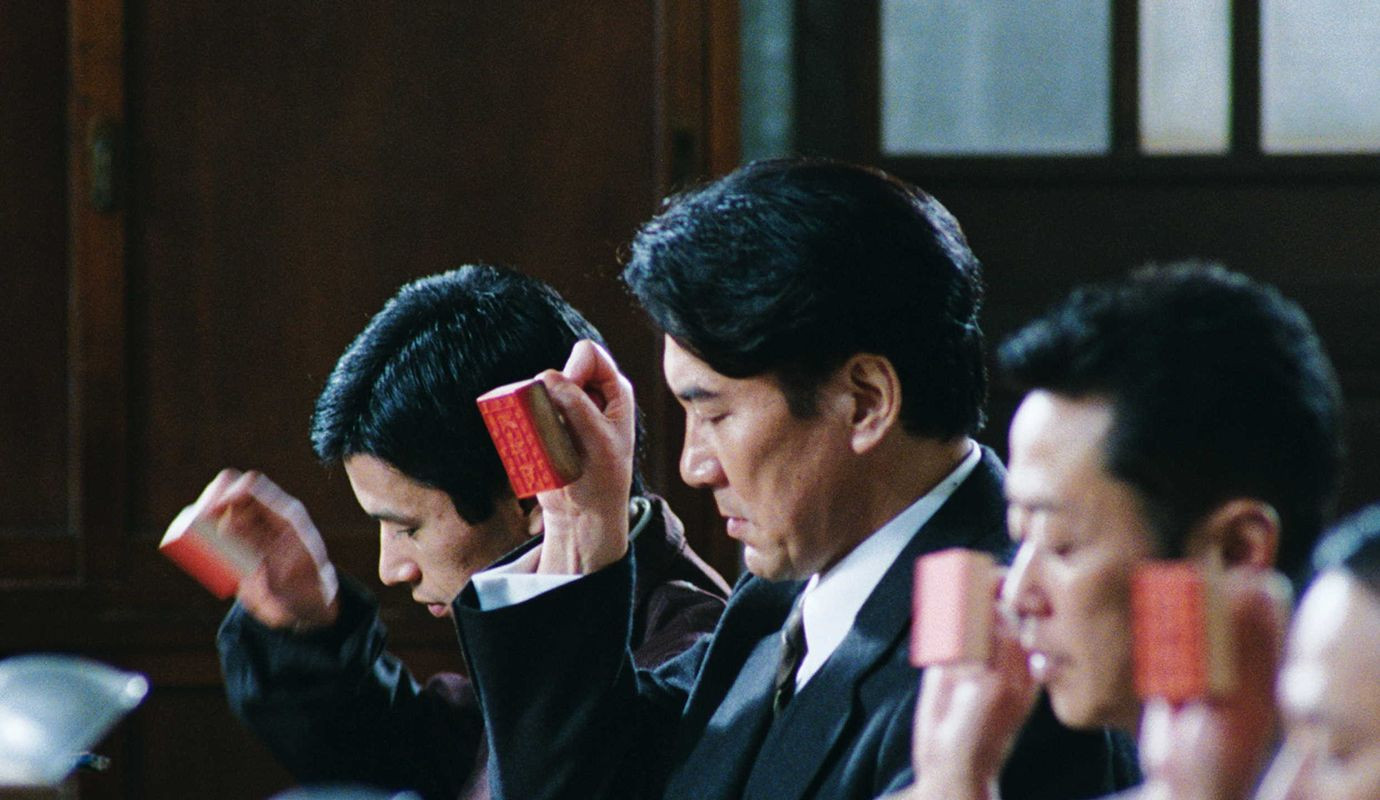
“I still believe that no comedy remains unfaded forever.”
Tsubaki was based on a Japanese comedy writer from before the war. The writer later went to the battlefield and never returned, though the plays he wrote survived.
“When I was writing University of Laughs, I read his comedies. To be honest, I did not find them funny,” Mitani said. “But I think that is perfectly fine. He wrote for audiences of his own time, and those audiences truly laughed. I also write for people living in the same era as I do. As long as everyone laughs and enjoys themselves, I am satisfied.”
At the end of the talk, another audience member said that the first Mitani film she had seen was The Magic Hour at the Golden Horse Film Festival. She remembered the entire theater laughing from beginning to end, and herself laughing until she cried. When she watched his later works, she sometimes found herself merely smiling inwardly. She wanted to know whether Mitani’s ideas about comedy had changed over the years.
“I love comedy very much, and I want to keep writing it,” he said. “There are actually very few reasons why people cry—some say there are only about three. But there are tens of thousands of reasons why people laugh.”
He therefore still wants to try writing comedy in every possible way. The audience member had probably noticed his years of exploration. “I do not believe that what I am doing now is the correct answer, either. I expect to write all kinds of different works in the future. Please look forward to them.”
Many years after the screening of The Magic Hour, that audience member still remembered the laughter filling the theater and how she had laughed until she cried. Watching University of Laughs in a cinema this time, I too laughed with the audience again and again, yet walked out with tears in my eyes.
Text / Ruru Shih
Film stills / Reproduced from the Taipei Golden Horse Film Festival website